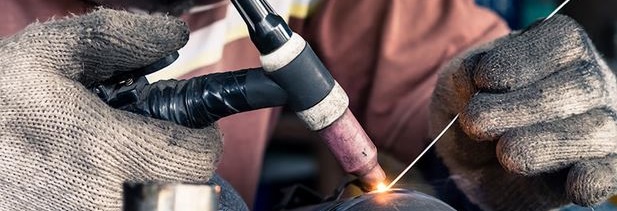
What is TIG welding?
TIG welding is the abbreviation of "Tungsten Inert Gas" welding, also known as Gas Tungsten Arc Welding (GTAW), is a welding process considered to be one of the most advanced and complex welding processes available. It is used, among other things, for welding high-quality and precise welds with high precision.
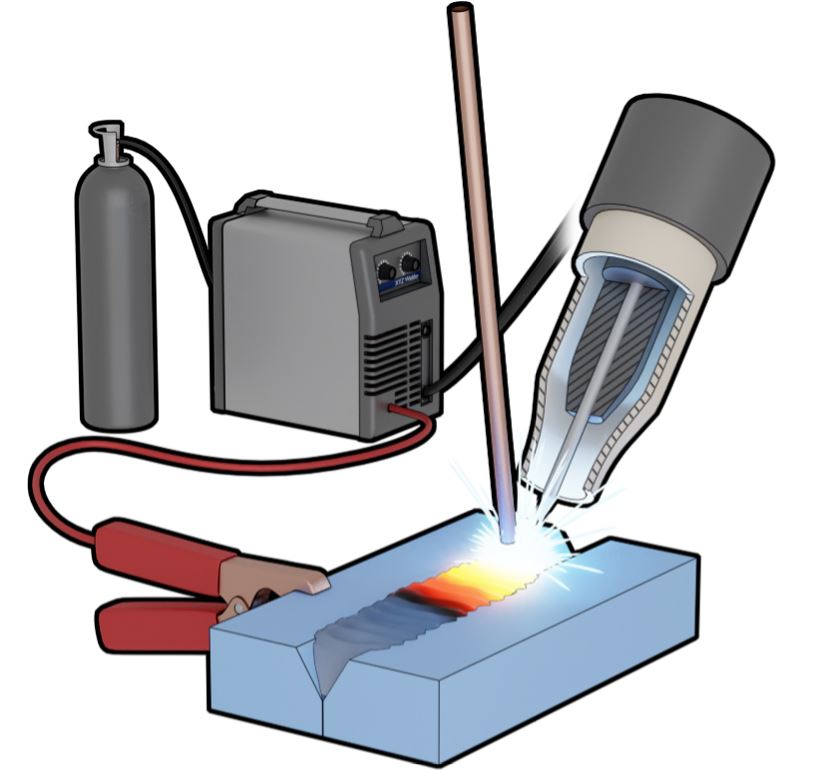
Setup for TIG welding.
This process uses a non-consumable electrode and an inert gas to protect the weld pool from contamination and oxidation.
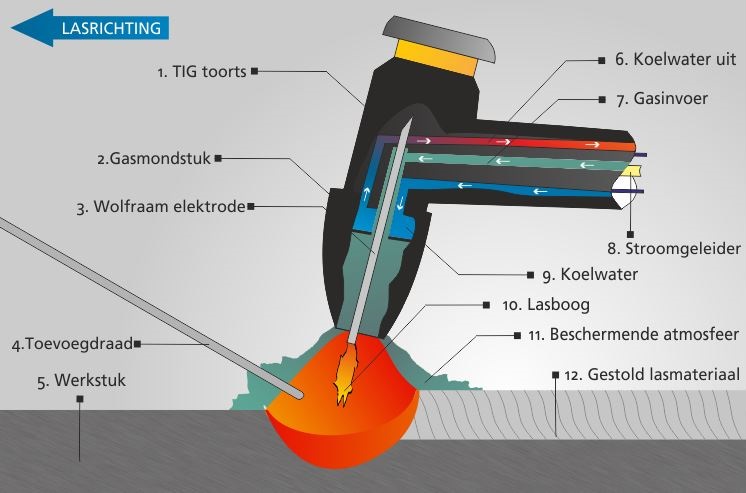
Cross-section of a TIG torch
This results in a very clean and precise weld, making TIG welding extremely suitable for applications in the aerospace, automotive, nuclear, and other high-quality industries where quality and precision are essential.
Animation film TIG welding.
TIG welding often requires a lot of knowledge,
experience, and skill from the welder.
The process can be applied to various materials, such as steel, stainless steel, aluminum, titanium, copper, and brass. It is especially suitable for welding thin materials and materials with high thermal conductivity. The welding quality is very high due to the precision of the weld and the minimal contamination of the material.
Example photos of TIG welding:
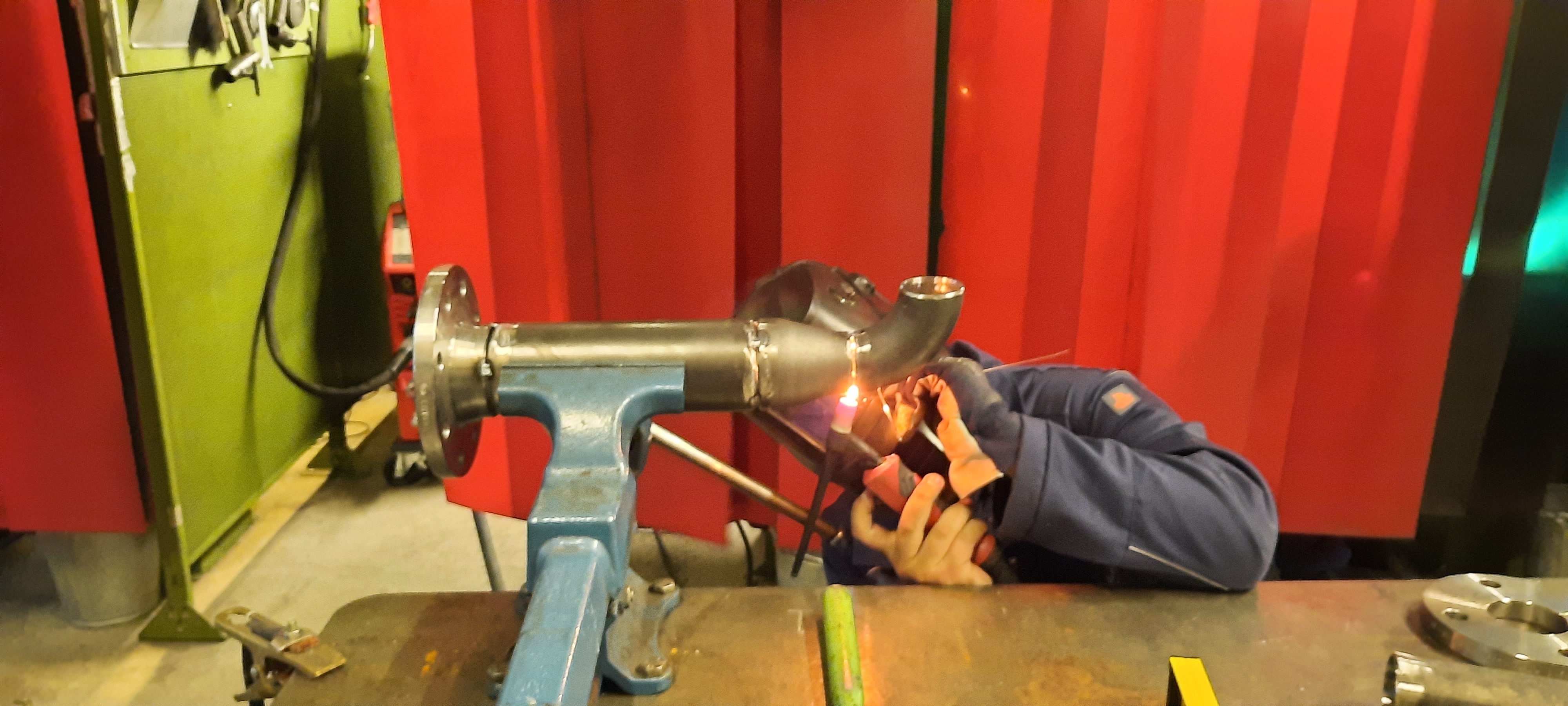
Pipe fitting is often done with TIG.
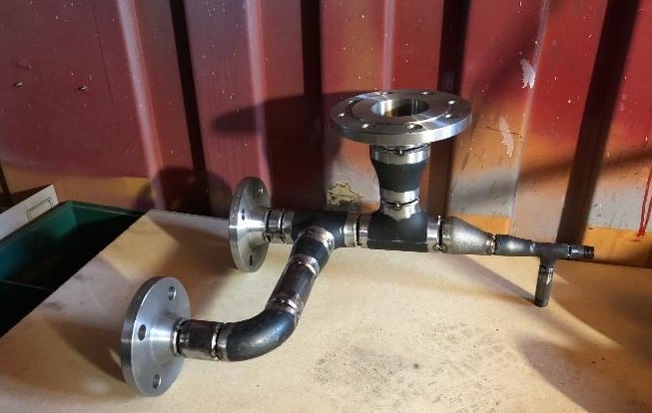
Example of a pipe section.
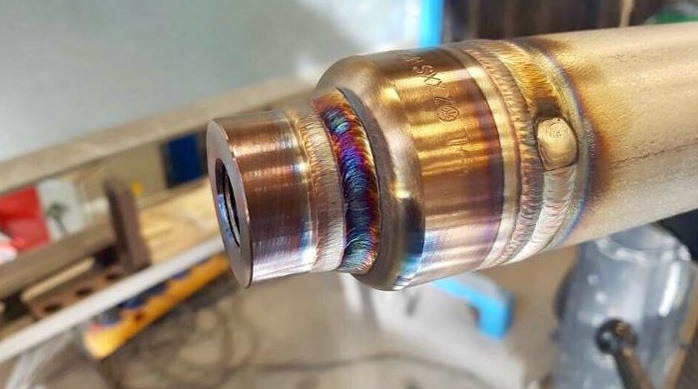
Thick-walled stainless steel pipe TIG welded.
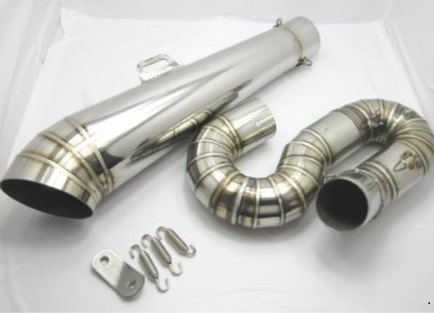
Titanium exhaust for motorsport.
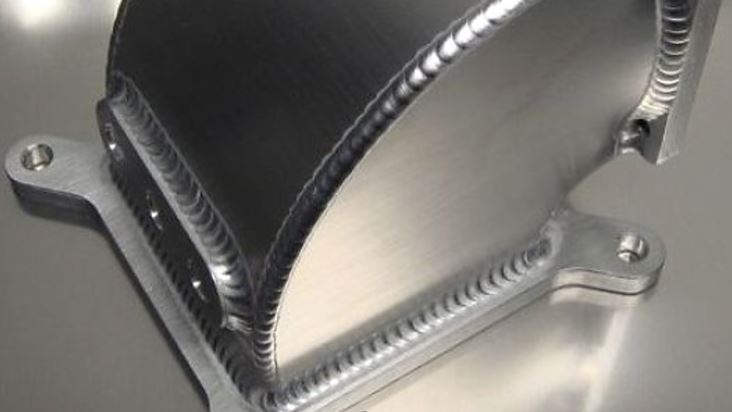
Aluminum workpiece TIG welded.
Each welding process has its advantages and disadvantages. Therefore, it is good to look at which welding process is most applicable for each type of work.
Advantages of TIG welding:
- . High welding quality
- . High accuracy
- . Good control over the weld
- . Weldable on all materials
- . Weldable in all positions
- . Nice weld appearance
Disadvantages of TIG welding:
- . Sensitive to drafts
- . Slow process
- . Difficult to learn